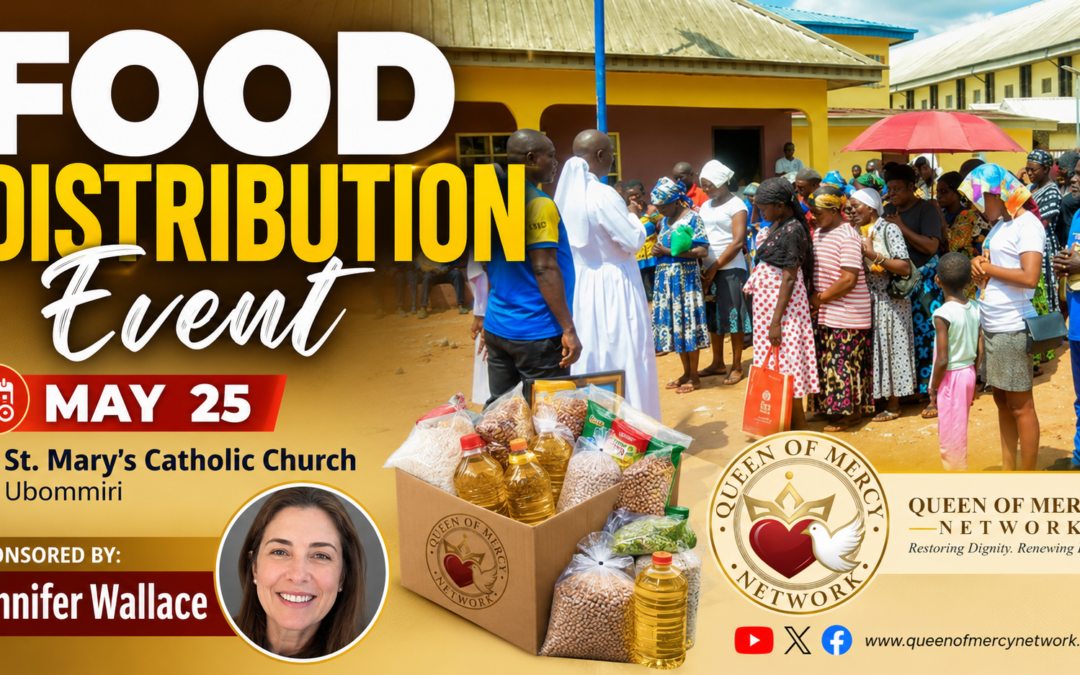
On May 25, 2026, Queen of Mercy Network organized a successful Food Distribution Outreach at St. Mary’s Catholic Church, Ubommiri, reaching vulnerable families and individuals with much-needed food assistance.
The event was made possible through the generous sponsorship of Jennifer Wallace, whose commitment to serving communities in need helped provide relief to many households facing economic challenges.
Watch the video:
A Mission Rooted in Compassion
At Queen of Mercy Network, our mission is centered on restoring dignity and renewing hope through acts of mercy, compassion, and community service. Hunger remains one of the most pressing challenges facing many families today. Through this outreach, we sought not only to provide food but also to remind recipients that they are valued, remembered, and supported.
As community members gathered at St. Mary’s Catholic Church, volunteers worked tirelessly to ensure an organized and respectful distribution process. Families received essential food items designed to help alleviate immediate nutritional needs while fostering a spirit of solidarity and care.
Community Impact
The outreach brought together volunteers, church leaders, sponsors, and local residents in a shared effort to support those most in need. The smiles, gratitude, and encouragement witnessed throughout the day reflected the profound impact that collective generosity can have on a community.
Food security is about more than meeting physical needs—it is about preserving dignity, strengthening families, and building hope for a better future. Every package distributed represented a commitment to these values.
Gratitude to Our Sponsor
Queen of Mercy Network extends heartfelt appreciation to Jennifer Wallace for her generous sponsorship of this outreach. Her support enabled us to expand our reach and provide assistance to many families who otherwise may have gone without.
We also thank the leadership of St. Mary’s Catholic Church, our dedicated volunteers, and every donor and supporter who contributed to the success of this event.
Looking Ahead
This outreach is one of many initiatives undertaken by Queen of Mercy Network as we continue our commitment to serving vulnerable populations. We remain dedicated to creating opportunities for hope, healing, and empowerment through community-driven programs.
Together, we can continue making a difference—one family, one community, and one act of mercy at a time.
To learn more about our mission, upcoming projects, and ways to support our work, visit:
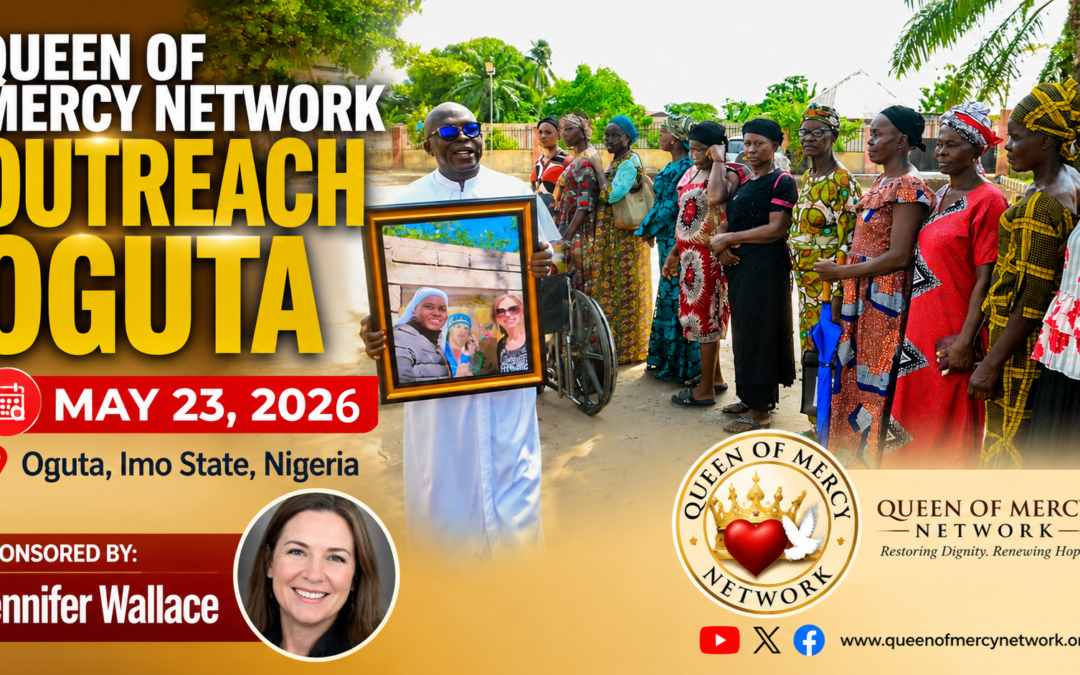
On May 23, 2026, Queen of Mercy Network carried out a successful humanitarian outreach in Oguta, Imo State, Nigeria, providing support, encouragement, and hope to members of the local community.
The outreach was generously sponsored by Jennifer Wallace, whose dedication to serving others helped make this impactful initiative possible.
Watch the video:
Compassion in Action
Queen of Mercy Network exists to restore dignity and renew hope through humanitarian service and community engagement. The Oguta outreach reflected these values by bringing together volunteers, supporters, and community members to address immediate needs while fostering a spirit of unity and care.
Throughout the event, participants experienced the power of compassion in action as assistance was provided to individuals and families facing various challenges. The outreach also created opportunities for meaningful engagement, encouragement, and connection within the community.
Strengthening Communities Through Service
Strong communities are built when people come together to support one another. The Oguta outreach demonstrated how collective generosity and volunteerism can create lasting impact.
By working alongside local leaders and residents, Queen of Mercy Network was able to reach those most in need while promoting a culture of dignity, respect, and hope. Every act of service contributed to a broader mission of empowering communities and improving lives.
Appreciation to Jennifer Wallace
Queen of Mercy Network extends its deepest gratitude to Jennifer Wallace for sponsoring this outreach and making it possible to reach and serve the people of Oguta.
Her generosity reflects a shared commitment to compassion, human dignity, and positive social impact. Through her support, lives were touched, needs were addressed, and hope was renewed.
Looking Forward
The Oguta outreach is part of Queen of Mercy Network’s ongoing mission to support vulnerable communities through humanitarian programs, food assistance initiatives, community development projects, healthcare outreach, and educational support.
As we continue our work, we invite individuals, organizations, and partners to join us in creating lasting change and bringing hope to those who need it most.
Together, we can build stronger communities and transform lives.
For more information about our programs and upcoming events, visit:
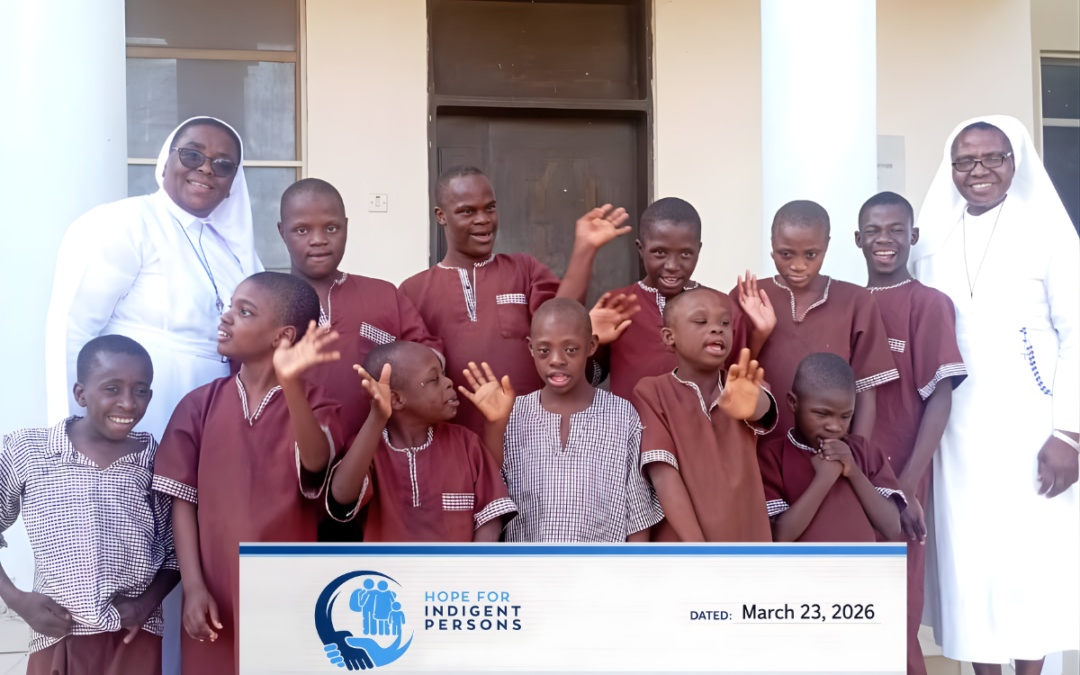
In a heartwarming move that aligns perfectly with our core mission at Queen of Mercy Network, we are proud to announce a ₦2.3 million donation to Ganaka International School in Jos North Local Government Area, Plateau State. This generous support will enable the Reverend Sisters running the school to establish a poultry farm — a vital step toward long-term self-sustenance for an institution dedicated to caring for some of Nigeria’s most vulnerable children.
At Queen of Mercy Network, we don’t just provide immediate relief. We invest in sustainable solutions that break the cycle of poverty. Whether it’s seed funding for individuals or institutional projects like this one, our goal is to create lasting dignity and independence for indigent families, mothers, and children. This poultry farm initiative is a shining example of that vision in action.
About Ganaka International School
Ganaka International School (also known as Ganaka International School for Inclusive Education) is a private special needs institution located behind St. Mulumba’s College in Jos, Plateau State (P.O. Box 915). Founded around 2005, it serves as a beacon of hope for children with cognitive impairments, visual impairments, hearing impairments, learning disabilities, and other special needs.
Run by the Handmaids of the Holy Child Jesus (HHCJ) Reverend Sisters — including dedicated leaders like Sr. Callista Umeh — the school provides inclusive and specialized education in a compassionate, faith-driven environment. It has become a recognized center for special education in Nigeria, with academic research highlighting innovative tools like the abacus for visually impaired pupils and assistive technologies that help children thrive despite their challenges.
These Reverend Sisters work tirelessly to educate, nurture, and empower children who are often overlooked by society. Yet, like many mission-driven special schools, they face ongoing financial pressures to keep the doors open and the lights on.
How the ₦2.3 Million Donation Will Make a Difference
Our donation will directly fund the setup of a poultry farm on the school grounds. This isn’t just about chickens and eggs — it’s about creating a reliable, self-generating source of income to:
Support daily operations and feeding of the children
Reduce dependency on unpredictable donations
Provide practical vocational training opportunities for older students
Ensure the Reverend Sisters can focus more on education and care rather than constant fundraising
In line with our work at Queen of Mercy Network — where we’ve seen seed funding transform individual lives — this project will help the school achieve greater financial stability while continuing its vital service to Plateau State’s indigent special-needs community.
A Shared Commitment to the Vulnerable
This partnership reflects what we stand for: dignity over dependency. By supporting institutions that serve the poorest and most marginalized — especially children with disabilities from struggling families — we’re investing in a brighter, more inclusive Nigeria.
We are deeply grateful to our donors and partners who made this possible. Your contributions are changing lives in real, measurable ways.
Together, we can do more. If you’d like to join us in supporting projects like this — or help more indigent children, mothers, and special-needs institutions — visit hopeforindigentpersons.com to donate, partner, or learn more.
Every naira counts. Every life transformed matters.
Queen of Mercy Network – Because no one should face hunger or lack of care alone.(Matthew 25:40 – “Whatever you did for one of the least of these brothers and sisters of mine, you did for me.”)
Have you ever wondered what it truly feels like to wake up each day unsure if you’ll eat, or if your child’s next illness could be the breaking point? In Nigeria, where over 133 million people grapple with multidimensional poverty, lacking not just money, but access to health, education, and basic dignity, these questions aren’t hypothetical. They’re daily realities for millions. But amid the hardship, organizations like Queen of Mercy Network (HIP) are stepping in with targeted support, from seed funding for single mothers to nourishment programs for vulnerable children. Drawing from real-life stories across the nation, this post explores eight key challenges driving engagement online, while highlighting how HIP’s compassionate initiatives are fostering hope and sustainable change. Whether you’re seeking ways to help or simply understanding the fight against poverty in Nigeria, read on your next step could make a difference.
1. Personal Stories of Overcoming Poverty and Its Emotional Toll
What if your family’s sudden fall from stability left you scavenging for survival, only to rise through sheer resilience? This isn’t a distant tale, it’s the lived experience of countless Nigerians, where poverty doesn’t just empty pockets but shatters spirits. Take Charity from Enugu State, a single mother who once struggled to feed her children after her partner’s business failed. She recalls days of skipping meals, her heart heavy with the emotional weight of watching her kids go hungry, yet she pushed forward by starting a small trade with community support. Her story echoes the raw pain of poverty’s emotional toll, feelings of shame, isolation, and despair that linger long after financial recovery begins.
Or consider Uduak Pius from Kaduna, a mother of six who endured the trauma of losing her sister-in-law, only to face pregnancy amid deepening hardship. “I was yet to recover from the trauma,” she shared, highlighting how poverty amplifies grief, turning everyday survival into an emotional battlefield. These aren’t near-fiction; they’re real accounts from Nigerians who’ve clawed their way out, often with a mindset shift realizing that poverty strips you naked, but resilience rebuilds you stronger.
At Queen of Mercy Network, they understand this deeply. As a non-profit focused on extreme poverty in Nigeria, HFIP provides seed funding to indigent individuals, sparking transformative changes. One success story involves three recipients who turned small grants into sustainable livelihoods, breaking free from the emotional chains of dependency. “We believe that every person, regardless of circumstance, deserves dignity, health, and the opportunity to thrive,” says HIP, echoing Mother Teresa’s wisdom: “If you can’t feed a hundred people, then feed just one.” Have you shared your own story of overcoming? Linking with HIP’s initiatives could inspire others Click on About usto learn more.
These narratives drive online engagement because they’re relatable, reminding us that poverty’s emotional scars heal through community and targeted aid, not handouts alone.
2. Food Insecurity, Hunger, and Malnutrition Crises
Imagine skipping meals not by choice, but because your next one depends on luck, how long could you endure? In Nigeria, with 33 million facing acute hunger in 2025-2026, this crisis isn’t abstract; it’s the daily fight for families like Hadiza’s in Borno State. Her 18-month-old daughter Jamila nearly succumbed to severe malnutrition until volunteers from a local NGO intervened, providing therapeutic feeding that saved her life. Hadiza’s tearful account “I was fighting for my child’s life” captures the heartbreak of mothers watching children waste away from lack of basics like rice or vegetables.
Similarly, Maryam, 20, from northeastern Nigeria, measures her baby’s arm only to find severe malnutrition, surviving on monotonous maize and sorghum amid displacement. These stories flood online spaces, sparking outrage and calls for action because who hasn’t felt the pang of an empty stomach, amplified a thousand fold in poverty?
HFIP tackles this head-on by addressing hunger and treatable diseases through nourishment programs, especially for indigent children and single-parent mothers. Their seed funding has enabled families to grow small gardens, echoing initiatives, where community efforts combat food scarcity. As Mahatma Gandhi noted, “The best way to find yourself is to lose yourself in the service of others”, a principle HFIP embodies. Could donating to their food security drives change a child’s fate? Join the fight against Nigeria’s malnutrition epidemic.
3. Poverty Mindset vs. Structural Poverty
Is poverty a mindset of dependency, or a structural trap built by systemic failures, perhaps both, trapping Nigerians in endless cycles? Debates rage online, like those critiquing a “begging culture” where crowds swarm celebrities for handouts, as seen in viral videos from Lagos. Yet, real stories reveal the structural side: in rural Nigeria, farmers like Mandeepa Patel face urbanization and poor governance, limiting access to loans and markets, perpetuating a “broken spirit” beyond individual will.
Take Sumaili, who expanded his farm with project aid, boosting income and educating his children, proving that while mindset matters, structural barriers like colonialism’s legacy often dominate. These discussions gain traction because they challenge norms: why blame the poor when policies fail them?
HFIP bridges this by fostering dignity through seed funding, avoiding handouts that reinforce dependency. Their work with marginalized communities in Imo State shifts mindsets toward self-reliance, as one beneficiary shared: “This has been a lifesaver.” Drawing from Matthew 25:40, “Whatever you did for one of the least… you did for me”, HIP promotes structural change. What if your support helped rewrite these narratives?
4. Support for Vulnerable Groups: Orphans, Widows, and Disabled Persons
Ever pictured a widow raising disabled children alone, her dreams deferred by endless barriers? In Nigeria, vulnerable groups like these bear poverty’s brunt, as in Mrs. Faith’s story, a mother of nine, including three with disabilities, struggling for basics without support. Or John from Zambia, abandoned at 3 and rescued to an orphanage, now thriving in high school, highlighting how aid transforms lives.
These tales resonate online, urging empathy for orphans, widows, and the disabled amid HIV/AIDS impacts on OVC (orphans and vulnerable children). Why do we overlook them when simple interventions could restore dignity?
HIP prioritizes these groups, offering healthcare, shelter, and mentorship for indigent children and single mothers. Their success stories of empowered widows align with initiatives like Succor For Orphans Widows & The Disabled, providing skills and opportunities. “Small acts of great love,” as Mother Teresa said, define their approach. Ready to contribute? Reach out to us today.
5. Government Failures and Calls for Policy Reforms
What happens when misplaced priorities leave millions in despair, begging global leaders for intervention? Nigeria’s government failures, from corruption to inadequate safety nets, fuel online outcry, as in pleas from the “battered masses” on International Poverty Eradication Day. Real accounts, like those from displaced families in Borno, show how insecurity and poor policies exacerbate hunger.
ActionAid Nigeria slams governance for ignoring poverty’s rise, projecting worse by 2027 due to weak accountability. These stories demand reforms, investing in education over handouts.
HFIP answers by advocating compassionate action, complementing policy gaps with direct aid. Their Jubilee of the Poor initiative calls for inclusive development, urging reforms. As Gandhi urged service, HIP pushes for change. How can you advocate? Engage us today.
6. Multidimensional Poverty: Access to Basics Like Power, Water, and Housing
Picture families rationing water from dirty wells, or enduring blackouts that halt progress – multidimensional poverty’s harsh face in Nigeria. In Oto/Ijanikin, Lagos, 74% lack clean water, forcing reliance on unsafe sources amid housing woes. Stories from rural women reveal security shocks and unemployment as top deprivations.
With 40% affected, these basics elude even salaried workers. Why tolerate this when solutions exist?
HIP’s clean water and shelter projects transform lives, providing dignity. Their efforts, inspired by biblical calls, address these gaps. Supporting us today could help light a home?
7. Charity Best Practices and Top Organizations
Tired of ineffective giving where donations vanish without impact? Best practices emphasize sustainability, like Lagos Food Bank’s nutrition drives or Slum2School’s education for slum kids. Real impacts shine in Oxfam Nigeria’s poverty alleviation, empowering communities.
Top orgs like Bet9ja Foundation focus on health and poverty. What makes effective charity? Verified, opportunity-driven aid.
HIP exemplifies this with transparent seed funding and community focus, earning praise for transformative work. Join our verified efforts – your donation counts.
8. Cultural and Religious Dimensions of Poverty and Charity
In a nation where faith shapes giving, how do cultural norms perpetuate or alleviate poverty? Islamic almsgiving and Christian charity intersect, as in Igbo community systems aiding the poor. Stories from faith-based FBOs show poverty as a moral call, with churches fighting injustice.
Religious rivalry sometimes hinders, but collaborative efforts prevail. Why not harness this for unity?
HIP, inspired by Mother Teresa, blends faith with action for inclusive development. Their feast celebrations inspire service- participate and bridge divides.
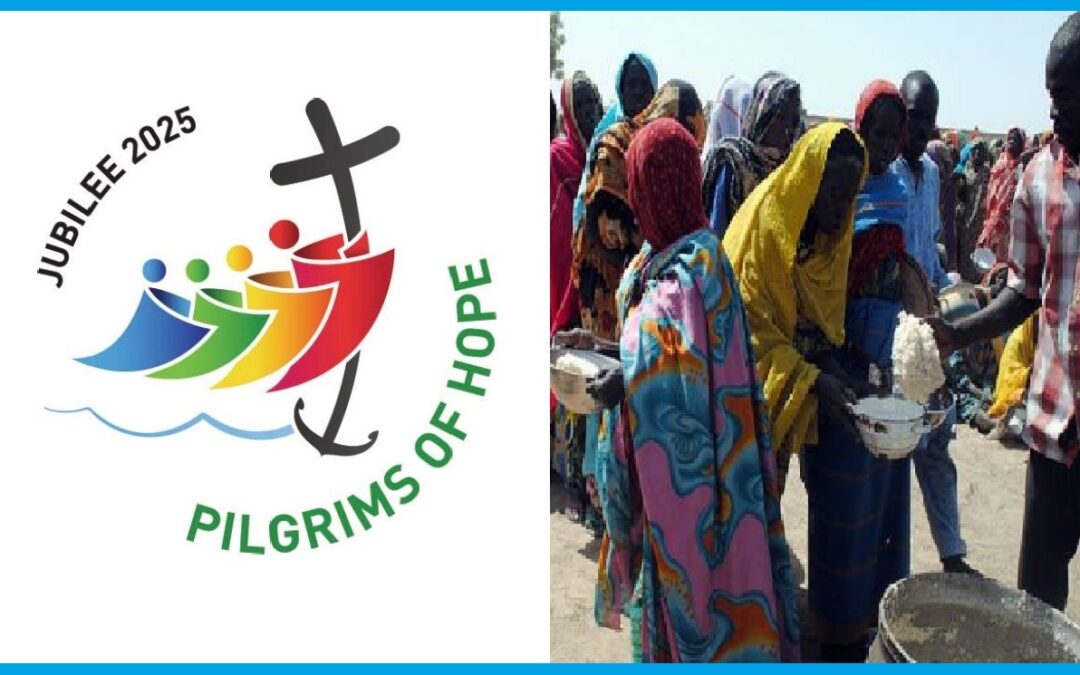
November 16 stands as a beacon of hope for millions globally as the Catholic Church and the world celebrate the Jubilee of the Poor, inspired by Pope Leo XIV’s compassionate call to solidarity, mercy, and justice. This day is not just a calendar fixture but a movement – a chance for communities, faith-based organizations, and individuals to recognize, embrace, and uplift those living on the margins of our society.
At Queen of Mercy Network, this mission is a daily, unwavering commitment. This Article explores how each of us, can respond to Pope Leo XIV’s summons to build a world of dignity, compassion, and restoration.
Understanding the Jubilee of the Poor – Pope Leo XIV’s Message
The Jubilee of the Poor is anchored in renewing awareness of those living in poverty. whether in body, mind, or spirit and seeing Christ in every face that struggles with material need, loneliness, or exclusion. As Pope Leo reflected in his exhortation Dilexi Te – “I Have Loved You”, our love for Christ is inseparable from our love for the poor. The most vulnerable teach us about the Gospel and its demands: courage, faith, and perseverance in the face of adversity.
“The Holy Father writes that ‘the poor have much to teach us about the Gospel and its demands… Their courage, faith, and perseverance reveal to us the living presence of Christ and invite us to a deeper conversion of heart.”
The Hidden Faces of Poverty
Poverty is not always visible. The bishop’s letter notes that it is easy to identify those lacking food, housing, or employment, but not as easy to recognize poverty in those suffering from isolation, anxiety, or despair. This is a challenge Queen of Mercy Network accepts daily, expanding its outreach to invisible needs, mental health, dignity, inclusion – as much as food and shelter.
Transforming Compassion into Action: What We Do at Queen of Mercy Network
Every act of kindness counts. Pope Leo XIV and the world’s bishops invite us to listen, encounter, and serve. Queen of Mercy Network puts this call into tangible, transformative action in several ways:
Emergency Shelter and Feeding Programs: Daily outreach serves meals and provides temporary shelter, ensuring indigent persons have safe places to rest and nutritional support.
Medical Aid and Access: By partnering with healthcare providers and mobilizing volunteer professionals, we deliver free and subsidized medical care to those denied access because of poverty or exclusion.
Education Empowerment: Scholarships, vocational training, and literacy programs help indigent children and young adults break the cycle of poverty.
Legal Rights Advocacy: Queen of Mercy Network works with legal professionals to help marginalized populations secure their rights, access justice, and navigate bureaucratic hurdles.
Mental Health Outreach: We run counseling and support groups for those isolated by mental health struggles, helping restore hope where despair dominates.
Community Building: Every program is designed to foster inclusive communities where each person is valued, and hope is restored.
How You Can Join the Jubilee of the Poor
Drawing from Pope Leo’s vision, responding to the call is simple but profound: encounter, listen, act, pray.
1. Encounter and Listen
Take time to listen to the stories of indigent persons in your community. Often, a listening ear is the first step to helping restore dignity.
2. Volunteer
Join us at Queen of Mercy Network. Volunteers are the heartbeat of our programs—from feeding and sheltering to mentorship and advocacy.
“On this World Day of the Poor, I invite you to join me in taking a simple, prayerful step toward encounter: listen to someone who is struggling, volunteer through your parish or a local ministry that helps those who are hungry and hurting…”
3. Donate
Your financial contribution, no matter how small, powers medical relief, food drives, scholarships, and shelter for the most vulnerable.
4. Share and Advocate
Spread the word online, in your parish, and on social media. Advocacy begins with awareness – help shine a light on hidden needs.
5. Pray
Join us in prayer for the poor – the forgotten, the sick, the lonely, the excluded. Prayer breaks barriers and unites hearts.
Building Communities of Value, Restoring Hope
The community means “where every person is valued, hope is restored, and where the love of Christ is made visible.” At Queen of Mercy Network, we strive daily to embody this vision, building communities where not charity but justice and mercy guide our steps.
Walking With the Poor: Lessons for Africa and Beyond
Africa faces daunting poverty statistics, but organizations like Queen of Mercy Network prove that change begins one person at a time, one act at a time. Our work reaches the forgotten corners – rural villages, city slums, homeless encampments – bringing hope through practical help and lasting investment in people’s lives. We believe, as Pope Leo and the bishop teach, that every person is a beloved child of God, worthy of dignity and compassion.
Responding to Pope Leo XIV’s Call – Why We Matters
November 16’s Jubilee of the Poor is a global stage for local action. Pope Leo XIV’s message reminds us that “the love of Christ is made visible” through our work; listening, serving, giving, and advocating for the lowest among us.
If you’re searching for how to help the poor, support indigent persons, or join a trustworthy mission for social impact in Africa, Queen of Mercy Network offers many ways to make a difference. Donate, volunteer, share, pray and help turn compassion into hope, advocacy into justice, and service into restoration.
Let us walk together toward a world where, as Pope Leo XIV proclaims, poverty is met not with indifference or mere charity, but with a loving commitment to justice, dignity, and mercy for all.
“May this observance renew in all of us the desire to be a Church that loves as Christ loves – a Church that walks with the poor, learns from them, and serves them with humility and compassion.”
Join us at Queen of Mercy Network, and help deliver the hope that every indigent person deserves.
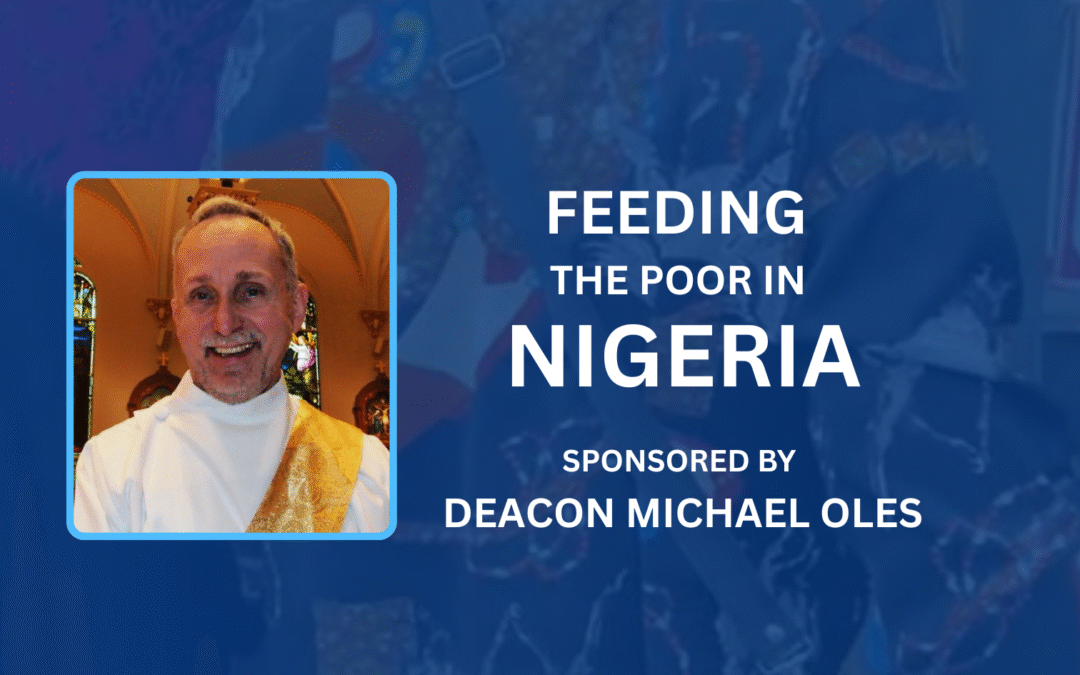
Hope for Indigent Persons (HFIPs) in Oguta, Imo State, Nigeria, spearheaded by its Founder Sister Hilda Ify Uzokwe and generously sponsored by Deacon Michael J. Oles, carried out a crucial food distribution exercise in early October 2025. This act of kindness came at a critical time when Nigeria faces staggering poverty rates. With over 54% of the population living in poverty by 2025, as estimated by the World Bank, the work done by HFIPs is more vital than ever. This article delves into the grim statistics underpinning Nigeria’s poverty crisis, explains the importance of the HFIPs initiative, acknowledges the generosity of its sponsors, and calls on readers to support this life-changing cause.
Facing the Harsh Reality of Poverty in Nigeria
Nigeria is often described as the poverty capital of the world, a reflection of decades of economic challenges, inequality, and systemic issues. As of 2025, World Bank data show that about 75.5% of Nigerians living in rural areas are trapped in poverty. The disparity between urban and rural poverty is stark: while 41.3% of urban Nigerians live below the poverty line, almost double that percentage of rural citizens do. Nationwide, over half of Nigerians, approximately 54%, are estimated to live in poverty today, up sharply from 30.9% before the COVID-19 pandemic.
This widespread poverty manifests in dire conditions: lack of access to sufficient food, clean water, sanitation, electricity, education, and healthcare. Children and women are disproportionately affected, with poverty rates among children 0-14 years at 72.5% and among females around 63.9%. Lack of formal education compounds poverty, with nearly 80% of those without education living below the poverty line.
Despite Nigeria’s large economy by GDP size, it ranks as the 12th poorest country by GDP per capita globally in 2025, reflecting deep income inequality and economic challenges such as dependence on oil, lack of diversification, and weak infrastructure.
The Impact of Hope for Indigent Persons (HFIPs)
It is against this backdrop that Hope for Indigent Persons steps in with urgent aid and empowerment programs. Founded by Sister Hilda Ify Uzokwe, HFIPs recognizes the necessity of addressing immediate humanitarian needs while building longer-term support networks for the indigent in communities like Oguta in Imo State.
The October 2025 food distribution exercise in Oguta provided essential food items to indigent individuals and families, helping to alleviate immediate hunger and food insecurity. The initiative is more than just relief, it represents dignity, hope, and community solidarity, crucial elements in combating the social effects of poverty.
Sister Hilda’s vision is supported by a team of dedicated volunteers, including Deacon Michael J. Oles, whose sponsorship and fundraising efforts are vital to the sustainability of HFIPs projects. His leadership and generosity exemplify the power of committed individuals to spark meaningful change through social responsibility and faith-driven philanthropy.
Why Your Support is Crucial
With millions of Nigerians still suffering from poverty and food insecurity, HFIPs relies on public support to continue and expand its reach. Contributions to HFIPs directly fund food distributions, healthcare access initiatives, educational programs, and community development projects.
There are compelling reasons for readers and potential donors to support HFIPs:
– Urgent Humanitarian Need: The poverty statistics in Nigeria are alarming, with large segments of the population living below survival thresholds. Immediate aid like food distribution is life-saving.
– Empowerment through Partnership: HFIPs not only provides relief but also works to empower recipients through social inclusion and awareness, creating a foundation for improving lives beyond the immediate crisis.
– Transparency and Impact: With committed leadership and clear objectives, HFIPs ensures that donations and resources reach the intended beneficiaries efficiently.
– Community Upliftment: Supporting HFIPs helps in strengthening communities like Oguta, fostering resilience and hope amidst adversity.
Donating to HFIPs is a meaningful way to contribute to ending poverty in Nigeria and changing thousands of lives for the better.
How to Get Involved
Contributors can help Hope for Indigent Persons in multiple ways:
– Monetary Donations: Use this Linkto donate securely online. Every contribution counts, no matter the size.
– Volunteerism: Offer your time and skills in fundraising, awareness campaigns, or local aid distribution efforts.
– Advocacy: Use social media platforms and community networks to spread the word about HFIPs and the poverty crisis in Nigeria, motivating others to act.
By joining forces, individuals, businesses, and organizations can amplify the impact of HFIPs and help transform lives across Nigeria.
A Heartfelt Thank You to Deacon Michael J. Oles
The success of HFIPs’ programs is anchored by key supporters like Deacon Michael J. Oles. His financial sponsorship and volunteer work have played a crucial role in bringing relief to the impoverished. The collaboration between Deacon Oles and Sister Hilda Ify Uzokwe epitomizes how faith, leadership, and commitment can overcome social challenges and restore hope to the indigent.
Be a Part of Nigeria’s Hope
The poverty situation in Nigeria is daunting, but initiatives like Hope for Indigent Persons offer a powerful response rooted in compassion and action. The October 2025 food distribution in Oguta, Imo State, symbolizes the positive change that is possible when communities and individuals come together.
Readers are encouraged to support HFIPs through donations, volunteer work, or spreading awareness. Every action counts in the fight against poverty.